Royal Legacy of Tripura & Manipur: A Connected History
 NETB24
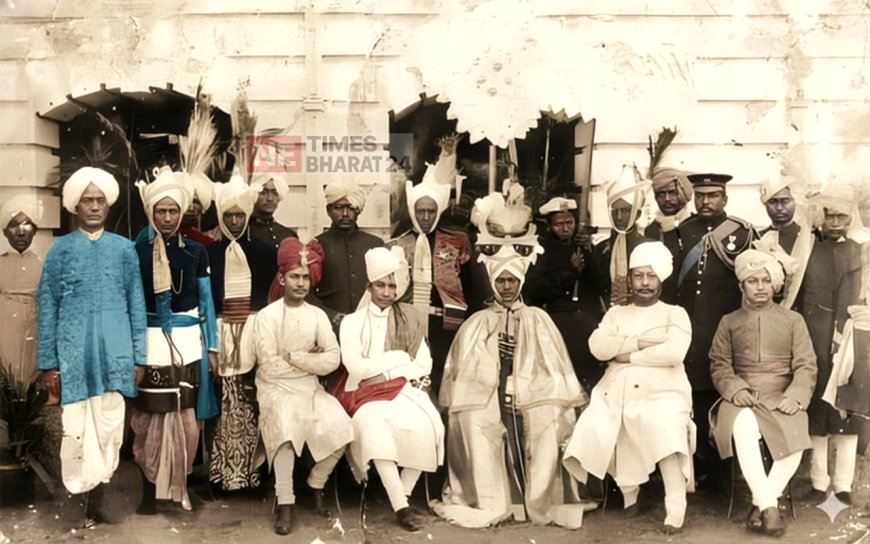
Featuring Maharaja Radhakishore Manikya, Yuvraj Birendra Kishore, Maharaja Churachand, Maharaja Bir Bikram, and Maharaja Kirit Bikram
1. The Early Foundation: Maharaja Radhakishore Manikya (Reign: 1896–1909)
Maharaja Radhakishore Manikya Bahadur Debbarma laid the foundation for modern Tripura.
His era saw:
- Introduction of modern administration
- Strengthening of Agartala town
- Encouragement of education, arts, and architecture
- Early diplomatic alliances with neighboring princely states
It was during his reign that a historic meeting took place between him, his son Yuvraj Birendra Kishore, and Maharaja Churachand Singh of Manipur.
This meeting symbolized the solid royal friendship between Tripura and Manipur — two culturally rich kingdoms of the Northeast.
2. Yuvraj Birendra Kishore: The Artistic Prince Becomes King (Reign: 1909–1923)
After Radhakishore’s death, Birendra Kishore Manikya Debbarma ascended the throne.
He was a visionary king known for:
- Establishing Ujjayanta Palace Art Studio
- Promoting artists, musicians, and craftsmen
- Designing important buildings like the Durbar Hall
- Encouraging mixing of Tripuri culture with global art styles
He maintained strong ties with neighboring rulers, including Maharaja Churachand Singh. Their connection resulted in cultural exchange between Meitei and Tiprasa courts.
3. Maharaja Churachand Singh of Manipur (Reign: 1891–1941)
Young and charismatic, Churachand Singh was recognized by the British and ruled with dignity.
His achievements included:
- Revival of Manipuri classical dance traditions
- Administrative modernization
- Strengthening relations with Tripura, Assam, and other northeastern states
The historic photograph of Radhakishore, Birendra Kishore, and Churachand reflects a moment of unity and mutual respect.
THE LEGACY CONTINUES: The Rise of New Generation Kings
4. Maharaja Bir Bikram Manikya (Reign: 1923–1947)
Grandson of Radhakishore Manikya
Son of Birendra Kishore Manikya
Known as the “Architect of Modern Tripura”, Maharaja Bir Bikram Kishore Manikya elevated Tripura to a new level.
His major contributions:
- Built Ujjayanta Palace expansions, and several iconic buildings
- Constructed Agartala Airport (later named Maharaja Bir Bikram Airport)
- Initiated modern town planning
- Set up educational institutions including MBB College (1947)
- Reserved land for the Tiprasa Indigenous communities
- Strengthened relations with Manipur, Assam, and the Hill States
- His progressive vision helped Tripura transition smoothly into independent India.
Maharaja Churachand of Manipur and Bir Bikram often shared correspondence about modernization, culture, and administration — a continuation of the old royal friendship.
5. Maharaja Kirit Bikram Manikya (Reign: After 1947, Titular King)
Son of Bir Bikram Manikya
When Maharaja Bir Bikram died unexpectedly in 1947, his son Kirit Bikram Manikya was still a minor.
Tripura was ruled by a Council of Regency led by his mother Maharani Kanchan Prava Devi until the state's merger with India on 15 October 1949.
Maharaja Kirit Bikram's Significance:
- He was the last titular king of Tripura
- Represented Tripura’s royal identity in post-independence India
- Served as an MP and continued cultural promotion
Kirit Bikram's era marked the shift from monarchy to democracy — but the pride and heritage of the Manikya Dynasty continued through him.
THE CONTINUOUS THREAD OF HISTORY
When we connect all these rulers, a clear pattern emerges:
1. Radhakishore Manikya
Laid the foundation of modern Tripura and royal diplomacy with Manipur.
2. Birendra Kishore Manikya
Transformed the kingdom into a cultural hub.
3. Maharaja Churachand Singh of Manipur
Revived Manipuri culture while maintaining strong Northeast alliances.
4. Bir Bikram Manikya
Brought Tripura into the modern world, establishing institutions still standing today.
5. Kirit Bikram Manikya
Carried the royal legacy into democratic India.
THE HISTORIC CONNECTION: TRIPURA & MANIPUR
Across generations, the royal families of Tripura and Manipur shared:
-
Diplomatic friendship
-
Cultural exchange
-
Mutual respect
-
A shared goal of modernizing their kingdoms
The stories of these kings — captured in photographs, letters, and architecture — tell the tale of a proud Northeast heritage that shaped modern Tripura and Manipur.
By Choba Tripura