G7 Countries Condemn Attacks on Civilians and Infrastructure in West Asia
The Group of Seven (G7) countries have strongly condemned the recent attacks on civilians and infrastructure in West Asia. In a joint statement, the leaders urged all sides to show restraint and avoid further escalation that could lead to a wider regional conflict. The G7 also stressed the importance of protecting global energy supply routes, particularly the Strait of Hormuz, which is one of the world’s most important oil shipping corridors. International leaders warned that continued violence could threaten regional stability and global security.
 NETB24
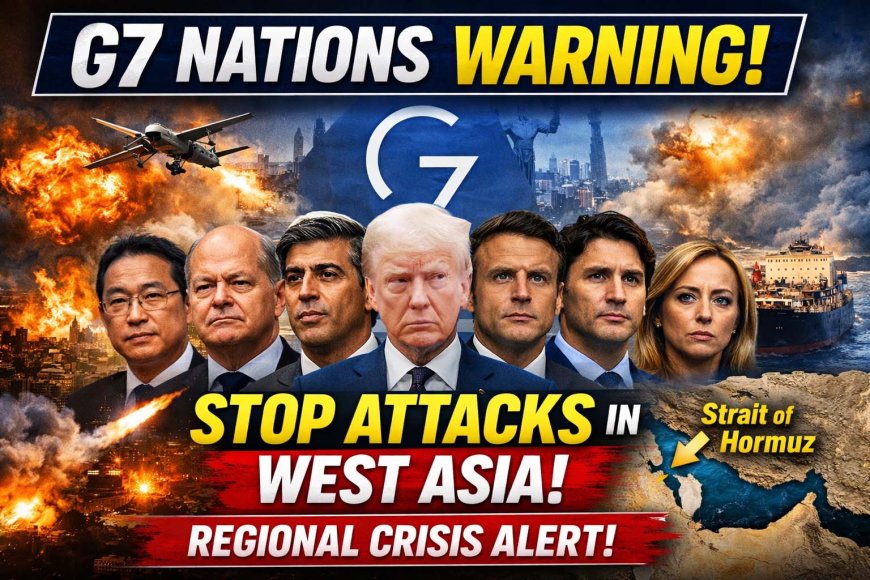
The Group of Seven (G7) countries have strongly condemned the recent attacks on civilians and civilian infrastructure in West Asia, calling for immediate restraint to prevent the conflict from spreading further across the region.
According to a joint statement issued by the foreign ministers of the G7 nations — Canada, France, Germany, Italy, Japan, the United Kingdom and the United States — along with the European Union’s foreign policy chief, the countries denounced what they described as reckless attacks targeting civilians and key infrastructure, including energy facilities.
The statement emphasized that such attacks pose a serious threat to regional stability and global security. The G7 urged an “immediate and unconditional cessation” of these attacks, warning that continued escalation could have far-reaching consequences for international peace.
Leaders also highlighted the importance of protecting global energy supplies and major maritime routes, especially the Strait of Hormuz, one of the world’s most critical oil shipping corridors. They reaffirmed their readiness to take necessary measures to ensure the safety of international shipping, energy supply chains and global markets.
The strong reaction from the G7 comes amid rising tensions in the Middle East, where missile and drone strikes have targeted several countries and key energy installations, raising fears of a wider regional conflict and disruption to global energy markets.
International observers believe that diplomatic pressure from major world powers may play an important role in preventing further escalation and encouraging dialogue between the parties involved.