Pradyot’s Sharp Reply to CM Manik Saha Over Kokborok Script
A political controversy erupted in Agartala during the Janajati Morcha Maha Jukdhan Sabha after Tripura Chief Minister Dr. Manik Saha questioned the use of the Roman (English) script for writing Kokborok, suggesting the community develop its own script like the Chakma and Mog. Responding sharply, TIPRA Motha founder Bubagra Pradyot Bikram Manikya said the choice of script belongs to the Tiprasa people. He cited historical examples of linguistic imposition leading to conflict and questioned why English is termed a foreign language when many leaders send their children to English-medium schools. He urged the government not to interfere in the community’s linguistic choices.
 NETB24
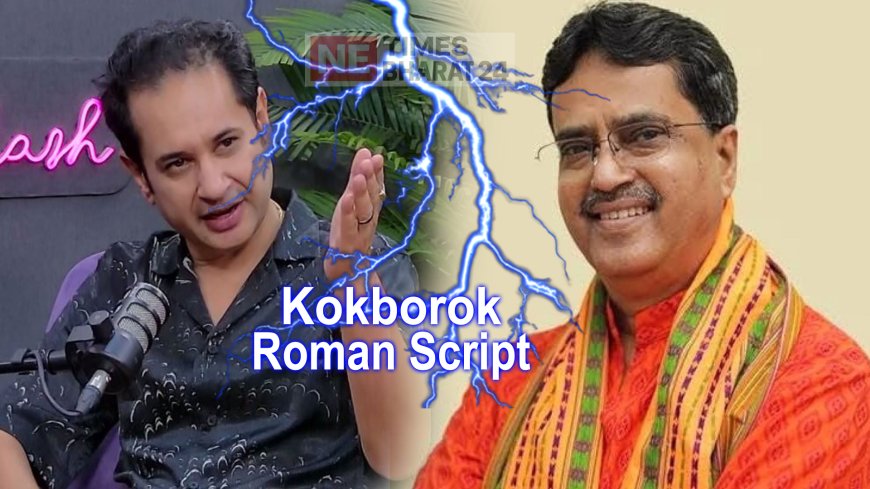
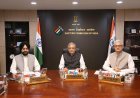
A political debate over the Kokborok language script intensified on Saturday during the Janajati Morcha Maha Jukdhan Sabha held in Agartala, after Tripura Chief Minister Dr. Manik Saha questioned the preference for writing Kokborok in the Roman (English) script.
Addressing the gathering, Chief Minister Dr. Manik Saha reportedly asked why sections of the Tiprasa community were willing to write Kokborok using the English script instead of developing their own script, citing examples of communities such as the Chakma and Mog who use distinct scripts for their languages.
In response, TIPRA Motha founder and royal scion Bubagra Pradyot Bikram Manikya issued a strong rebuttal, asserting that the choice of script is a matter of cultural freedom. He thanked the Chief Minister for his advice but emphasized that it is the community’s right to decide which script to use for their language.
Pradyot Bikram Manikya stated that languages across India, including Tamil and Marathi, are written in scripts chosen by their speakers, and similar autonomy should be respected for Kokborok. Drawing a historical reference, he remarked that present-day Bangladesh was once East Pakistan, and linguistic imposition—particularly surrounding Urdu and Bengali—had led to conflict and war.
He further questioned the argument that English is a “foreign language,” pointing out that many elected representatives, including MLAs and ministers, send their children to English-medium schools and colleges. He urged political leaders not to interfere in the linguistic choices of the Tiprasa people.
The issue of Kokborok script has remained a long-standing and sensitive subject in Tripura’s socio-political landscape, often intersecting with identity, education, and indigenous rights.
By Choba Triopura