Jaishankar Warns of Possible Major Food Crisis Amid Global Energy and Fertiliser Pressures
External Affairs Minister S. Jaishankar has warned of a possible major food crisis in the coming months, citing disruptions to grain shipments, fertiliser shortages, energy pressures and geopolitical conflicts. He said the combined impact is placing particular stress on Global South economies, while climate risks such as El Niño could further complicate food production.
 NETB24
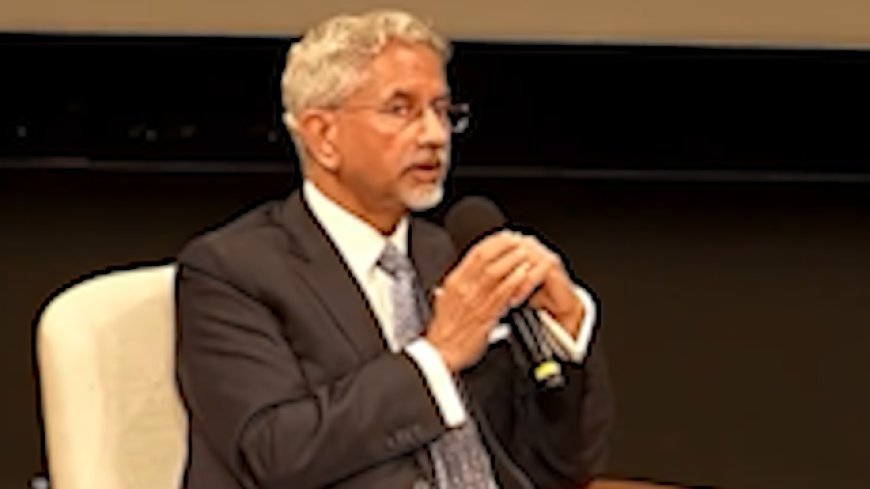
NEW YORK, September 29, 2026: External Affairs Minister S. Jaishankar has warned that the world could face a major food crisis in the coming months as geopolitical conflicts, disruptions to grain shipments, fertiliser shortages and energy-market pressures increasingly overlap.
Speaking at an Asia Society event in New York, Jaishankar said the ongoing conflicts involving Ukraine and the Iran-Gulf region were placing significant pressure on economies across the Global South. He linked the situation to wider problems involving energy, food, fertilisers and international finance.
A key concern is the disruption of fertiliser production and supply chains. Russia is an important global fertiliser producer, while several major production and supply routes are connected to West Asia. Any prolonged disruption could increase costs for farmers and make agricultural production more difficult in countries dependent on imports.
Jaishankar also highlighted risks to global grain shipments, particularly from major exporting regions. Disruptions to established trade routes could reduce supplies available to international markets and increase pressure on food-importing countries.
The minister further pointed to energy shortages as another major factor. Higher energy costs can affect transportation, food processing and fertiliser production, creating a chain reaction across the agricultural and food sectors.
Climate conditions could add another layer of uncertainty. Jaishankar referred to the possibility of a strong El Niño affecting agricultural production. Weather-related disruptions can influence crop yields and add pressure to food prices and supplies.
The combined pressures could be particularly challenging for developing economies that depend heavily on imported fuel, fertilisers or food commodities. Jaishankar said the situation is placing substantial stress on economies in the Global South.
However, the minister's warning should be understood as a risk assessment rather than confirmation that a global food shortage has already begun. The eventual impact will depend on the duration of conflicts, the availability of fertilisers and energy, the stability of grain trade routes, weather conditions and government responses.
Jaishankar also called for greater international consideration of the consequences that geopolitical decisions can have on vulnerable economies, stressing the importance of ensuring access to basic food and energy supplies.
The warning has drawn attention to the increasingly interconnected nature of food security, energy security, fertiliser availability, climate risks and global finance.