India Win First Women’s World Cup After Dramatic Final
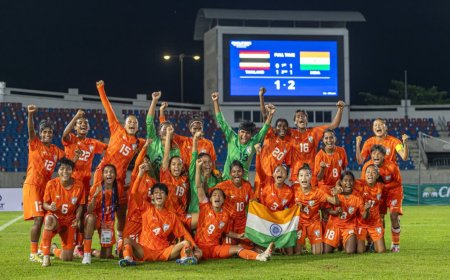
India’s women’s cricket team created history by winning their first-ever ICC Women’s Cricket World Cup. The final was played at D.Y. Patil Stadium in Navi Mumbai, where India defeated South Africa by 52 runs. Shafali Verma scored a brilliant 87 runs, while Deepti Sharma contributed 58 runs and took 5 wickets, leading India to victory. Celebrations erupted across the country, and the BCCI announced a ₹51 crore cash reward for the team. This win marks a new era for women’s cricket in India.
 NETB24

India’s women’s cricket team won their first ICC Women’s Cricket World Cup on Sunday, beating South Africa by 52 runs in a high-profile final at the D.Y. Patil Stadium. The victory is being hailed across the country as a milestone moment for women’s sport in India.
Batting first, India posted a competitive total of 298 for 7 in 50 overs, built on aggressive strokeplay at the top and useful contributions through the middle order. In reply, South Africa were bowled out for 246 in the 46th over, falling short despite fighting knocks from their middle order.
Left-hand opener Shafali Verma produced a blistering innings and played a major role at the top of the order, while all-rounder Deepti Sharma made a decisive impact with both bat and ball. Their performances were central to India’s win and were widely praised by commentators and former players alike.
The tournament was a rollercoaster for India: after suffering several defeats in the group stage, the team regrouped and produced crucial wins in the knockout rounds, including a memorable semi-final. The final win caps a remarkable turnaround and underlines the depth and resilience of the squad.
Reactions poured in from across the nation. Political leaders, former athletes and fans celebrated the achievement, calling it a defining moment for women’s cricket and predicting increased investment and grassroots interest in the sport.
The national board announced a substantial reward for the winning team and support staff, while cricket administrators and sponsors signalled plans to boost facilities, domestic competitions and development programmes for women.
By Swapan Das